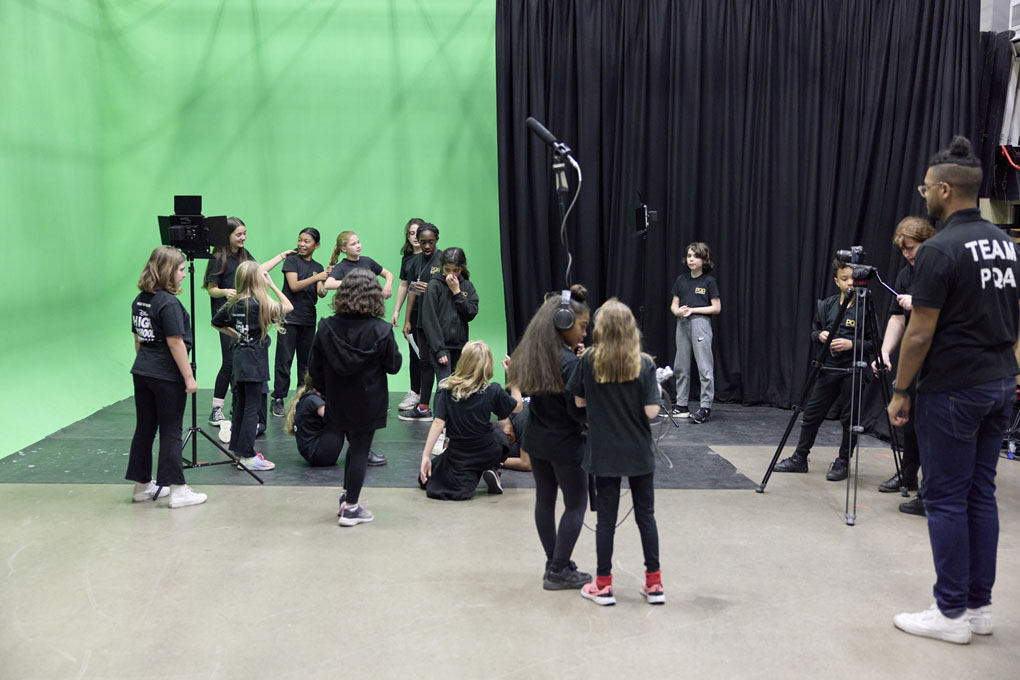
Think film and television are just about being in front of the camera? Think again.
In PQA’s unique Film & Television module, students don’t just act—they explore every aspect of film and TV production. From directing and producing to sound design and makeup artistry, the world of filmmaking offers a role for everyone. By creating and screening their own short films, students gain hands-on experience along with essential life skills like teamwork, communication, and problem-solving—skills that will benefit them in any future endeavour.
Ready to discover what goes on behind the scenes? Here’s a closer look at 15 key roles every aspiring filmmaker should know.
In PQA’s unique Film & Television module, students don’t just act—they explore every aspect of film and TV production. From directing and producing to sound design and makeup artistry, the world of filmmaking offers a role for everyone. By creating and screening their own short films, students gain hands-on experience along with essential life skills like teamwork, communication, and problem-solving—skills that will benefit them in any future endeavour.
Ready to discover what goes on behind the scenes? Here’s a closer look at 15 key roles every aspiring filmmaker should know.
In addition to live-action filming, PQA students also dive into animation, discovering how animators bring stories to life through movement. Our programme even includes an animation project in partnership with the award-winning Aardman studio, introducing students to a new dimension of creative storytelling beyond the physical set.
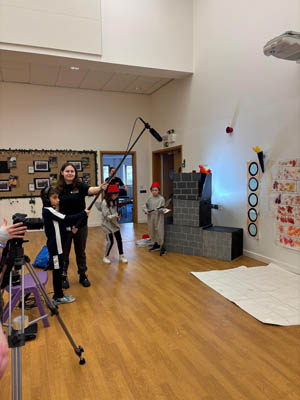
The principal responsibility of the boom operator is microphone placement, usually using a boom pole (or “fishpole”) with a microphone attached to the end (called a boom mic).Their aim is to hold the microphone as close to the actors or action as possible without allowing the microphone or boom pole to enter the frame.
The Production Designer focuses on the visual style of the set, designing and creating the overall look of the film or TV project. Their role includes selecting and overseeing props, set decorations, and backdrops to bring the director’s vision to life.
Also known as the Second Assistant Camera (2AC), the Clapper Loader operates the clapperboard and is responsible for syncing sound and picture during filming. Their role also includes managing camera equipment and film stock.
Also known as the Second Assistant Camera (2AC), the Clapper Loader operates the clapperboard and is responsible for syncing sound and picture during filming. Their role also includes managing camera equipment and film stock.
The Camera Operator works under the direction of the Director of Photography to physically operate the camera during filming. They are essential in capturing the scenes and ensuring the shots are executed smoothly.
The Location Manager works closely with the producer and director in researching the required locations from the script. They arrange location visits, identify costs and obtain permits.
The Editor assembles the film’s footage, cutting and arranging it to create a cohesive final product. They coordinate with the director to ensure the film’s pacing, continuity, and overall flow meet the original vision.
Responsible for capturing high-quality audio, the Sound Recordist works alongside the Boom Operator to record dialogue and sound effects during filming. Ensuring clear and crisp audio is crucial for delivering an immersive viewing experience.
The Director of Photography, or Cinematographer, is responsible for the visual look of the film. They collaborate closely with the director to make creative decisions about lighting, shot composition, and camera angles to visually tell the story.
The Producer is the driving force behind the production, overseeing everything from budgeting to final delivery. They manage the entire production process, ensuring that the project stays on track, on time, and within budget.
Behind the scenes, the Production Coordinator manages the logistics of filmmaking, organizing everything from crew schedules to equipment. Their efficient coordination ensures that everything runs smoothly during production.
Screen Actors perform in front of the camera, delivering subtle performances designed for close-up shots and varied camera angles. PQA’s training prepares students for the nuances of acting on screen, distinct from stage acting, where expressions and movements must be more controlled and natural.
The screenwriter plays a foundational role in the filmmaking process, crafting the script, dialogue, and narrative structure. Every film starts with the written word, and at PQA, students get the chance to learn the fundamentals of writing compelling scripts.
At PQA, we give children the tools to thrive in every aspect of Film and TV, whether that’s acting, directing, or understanding the behind-the-scenes process. Through fun and accessible training, young people gain creativity, technical expertise, and problem-solving abilities, preparing them for successful careers and personal growth.
Want your child to learn more about filmmaking? Read more about our unqiue Film and TV offering.
![Umbraco.Cms.Core.Models.MediaWithCrops`1[Umbraco.Cms.Web.Common.PublishedModels.Image]](/media/hqwnje2e/pqa-film-and-tv-classes.jpg)
![Umbraco.Cms.Core.Models.MediaWithCrops`1[Umbraco.Cms.Web.Common.PublishedModels.Image]](/media/py4drybg/film-television-classes-1.jpg)
![Umbraco.Cms.Core.Models.MediaWithCrops`1[Umbraco.Cms.Web.Common.PublishedModels.Image]](/media/m3hfjino/childrens-filmmaking-courses.jpg)
![Umbraco.Cms.Core.Models.MediaWithCrops`1[Umbraco.Cms.Web.Common.PublishedModels.Image]](/media/4pqiiyj1/film-and-tv-courses-for-kids.jpg)
![Umbraco.Cms.Core.Models.MediaWithCrops`1[Umbraco.Cms.Web.Common.PublishedModels.Image]](/media/ms3aqkrc/pqa-fkc-181123-1303-1.jpg)
![Umbraco.Cms.Core.Models.MediaWithCrops`1[Umbraco.Cms.Web.Common.PublishedModels.Image]](/media/3azmba5g/film-television-classes.jpg)
![Umbraco.Cms.Core.Models.MediaWithCrops`1[Umbraco.Cms.Web.Common.PublishedModels.Image]](/media/pvwl223o/film-television-classes-pqa.jpg)
![Umbraco.Cms.Core.Models.MediaWithCrops`1[Umbraco.Cms.Web.Common.PublishedModels.Image]](/media/z1ln0ncv/child-operating-lighting-equipment.jpg)


Yes! Every academy offers one free trial session, as long as there is space available in the age group. If the group is currently full, you can join the waiting list, and we’ll contact you as soon as a place becomes available.
PQA runs for 41 weeks throughout the school year. You can find the full list of term dates on each academy’s webpage, just search for your local academy and visit its web page.
PQA provides performing arts training for children and teens aged 4–18. Our Main Academy (ages 6–18) includes three core classes:
Some academies also offer Poppets (ages 4–6), an energetic 90-minute class introducing young children to singing, dancing and acting.
PQA welcomes all children, whether they’re complete beginners or already confident performers. There’s no audition needed to join.
At PQA students in Main Academy are grouped by age, learning with other children and young people at similar stages.
This depends on where you feel your child will be happiest. Some 6-year olds are ready to join the 6-9 age group in Main Academy, others will feel more comfortable starting in Poppets.
Your always welcome to discuss what’s best for your child with your local Principal before booking your free session.