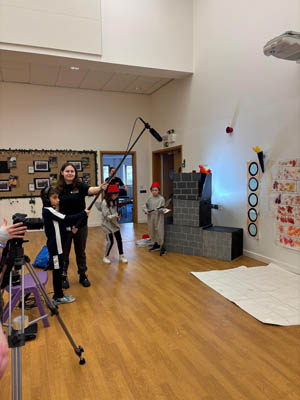
Our Comedy & Drama classes are designed to explore the many theatrical forms and performance techniques in a fun, engaging environment led by our inspiring teachers.

Together we have prepared  A quick tips and tricks guide for acting.

acting club blogs

Immerse yourself in the role completely

  1. Don’t Pretend, Be: Forget that you are pretending and try to become the character you are playing.
  2. Always stay in the characters state of mind when acting: If you try to pretend to be sad, it’s an effort; if you are sad, it comes out in your acting well.
  3. Envision how that person reacts to life: how that person dresses, walks, thinks and converses with others. Don’t be afraid to act like someone else.
  4. Use experiences that relate: Draw on real life memories when portraying the character, and use these memories to evoke truth in your portrayal.

Giving Your Role Life

  1. Research: Ensure that the character being portrayed has a history, by researching events and/or culture surrounding your character.
  2. Don’t be just a name: Give the character a status in life by assigning basics like a date of birth, age, marital status etc.
  3. Create relationships from the text: Create historical relationships with each of the character in the play to give the dialogue and on stage chemistry some gravitas.
  4. Be true to the character: Make sure that all actions and reaction of your character are true to how your character would behave. It will only take one “out of character” action/reaction for the audience to doubt your portrayal.

Working with a Director

  1. Always try: Never dismiss a direction for your character. Always explore and try before questioning if it works for you. This way your character is built in layers, not just on what you think is correct.
  2. Know the directors intent : Never be afraid to ask the director where he/she see’s your character, this way you will always have a collaborative and truthful understanding of the direction your character is going in.
  3. Commit to direction given: Commit to directions given to truly get a feel for what is being asked, even if you don’t truly believe its right for your character, if you fail to commit it will always feel weak and the audience will not believe.
  4. Know the director has the best interest of your character: Sometimes the director will insist on a direction for your character and its important that you embrace and except this regardless of how you feel about the direction given, otherwise truth will be lost.

Working with scripts

  1. Read the whole play: Never read just your lines. Read the whole play. Get a feel for the piece as a whole before reaching for the highlighter. Amateurs highlight first, professionals understand the position of their character within the piece first!
  2. Learn Lines: Learn lines well and learn them early. This will ensure you are not thinking about what is next, and thus losing the truth and the audiences belief in your character.
  3. Use scripts during rehearsals: You may be off script, but always have your script with you at rehearsals to make notes given on stage direction and character.
  4. Pick a time to put away: Once you have immersed yourself in the characters text and taken all notes and made them a fluid and believable part, put your script away and don’t look back at it. From this point on you’re the character and the character is you.


Find out more about your local PQA

Umbraco.Cms.Core.Models.MediaWithCrops`1[Umbraco.Cms.Web.Common.PublishedModels.Image]

Popular Posts.

Exciting Updates from PQA Cardiff AM academy: “Across the Line”
Academy
Exciting Updates from PQA Cardiff AM academy: “Across the Line”
pqa
Maira A
01, May, 2025
Lights, Camera, Action: Our Journey Through "Big Screen Classics”
Academy
Lights, Camera, Action: Our Journey Through "Big Screen Classics”
pqa
Maira A
01, May, 2025
Capturing the Magic of PQA’s Performing Arts Classes 
Academy
Capturing the Magic of PQA’s Performing Arts Classes 
pqa
Melissa Lawrence
03, September, 2025

FAQ's.

Can I try a session at PQA before signing up? 

Yes! Every academy offers one free trial session, as long as there is space available in the age group. If the group is currently full, you can join the waiting list, and we’ll contact you as soon as a place becomes available.

What are PQAs Term Dates? 

PQA runs for 41 weeks throughout the school year. You can find the full list of term dates on each academy’s webpage, just search for your local academy and visit its web page.

What Performing Arts Training Does PQA Offer? 

PQA provides performing arts training for children and teens aged 4–18. Our Main Academy (ages 6–18) includes three core classes:

  • Musical Theatre – singing, dancing and acting, with skills in choreography, script work and vocal technique.
  • Comedy & Drama – traditional acting training, including improvisation, physical theatre and devising comedy.
  • Film & TV – handson filmmaking, from screenwriting and directing to lighting, sound and animation.

Some academies also offer Poppets (ages 4–6), an energetic 90-minute class introducing young children to singing, dancing and acting.

Does My Child Need Performing Arts Experience? 

PQA welcomes all children, whether they’re complete beginners or already confident performers. There’s no audition needed to join.

Will My Child Be with Others Their Own Age at PQA?   

At PQA students in Main Academy are grouped by age, learning with other children and young people at similar stages.

  • Green Group: Ages 6-9
  • Blue Group: Ages 10-12
  • Red Group: Ages 13-18

Should My 6-Year-Old Join PQA Poppets or Main Academy? 

This depends on where you feel your child will be happiest. Some 6-year olds are ready to join the 6-9 age group in Main Academy, others will feel more comfortable starting in Poppets.

Your always welcome to discuss what’s best for your child with your local Principal before booking your free session.